
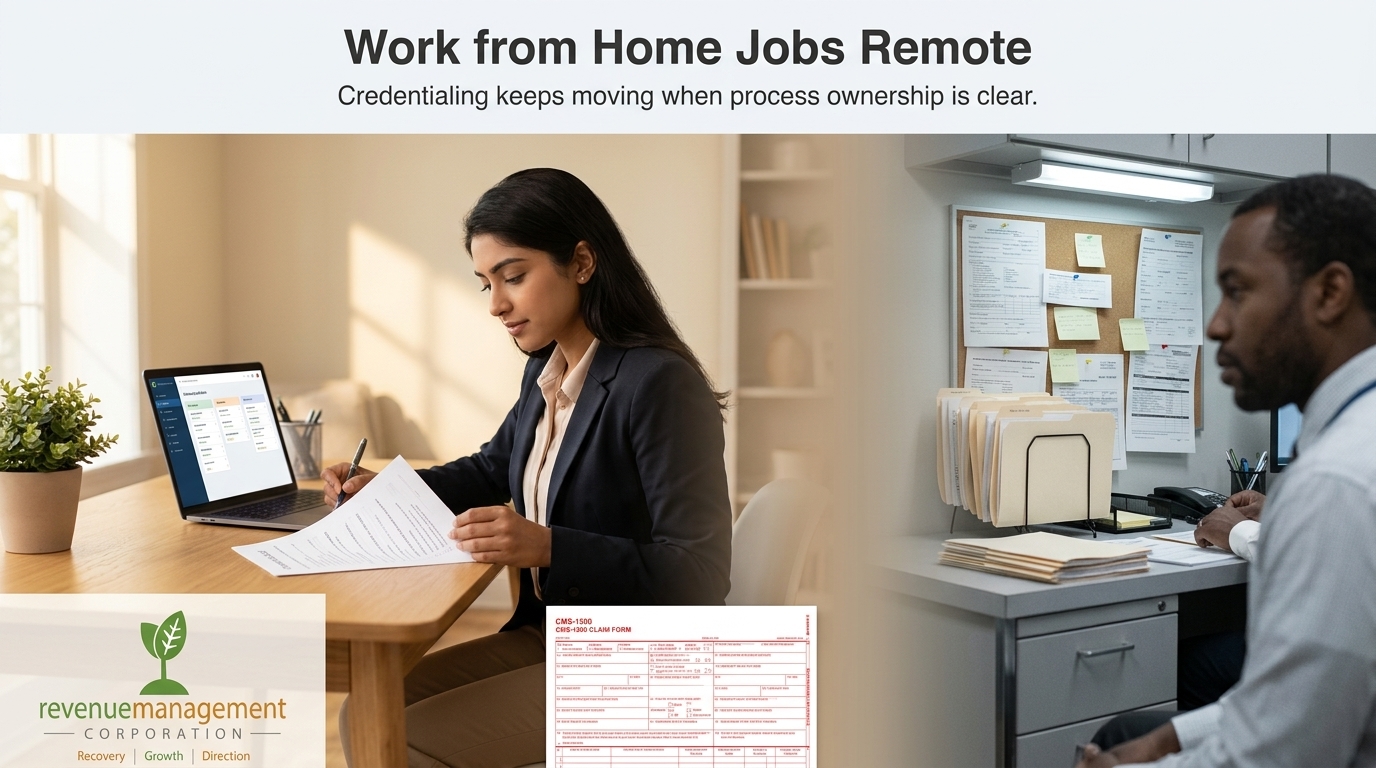
Remote work in healthcare rarely fails because staff are offsite. The real challenge lies in unclear handoffs that stall credentialing and revenue flow. If your practice struggles to keep provider enrollment and credentialing on schedule while offering remote flexibility, you’re not alone. This post shows how clear process ownership paired with expert support can keep your credentialing workflow moving and cash flow steady, even with distributed teams.
Explore the benefits of Medical Billing Companies and discover how AAPC-Certified Coding enhances revenue cycles. Learn lessons from Amazon Work-From-Home Jobs applicable to healthcare practices for building efficient remote teams.
Overcoming Remote Credentialing Challenges
Remote credentialing can feel daunting, especially when it’s not just about where your team works, but how they work. Let’s explore how rethinking remote obstacles can lead to smoother operations.
Reframing Remote Work Obstacles
Imagine your remote team as a well-oiled machine. The key is not just flexibility but efficiency. Many assume that remote work inherently leads to delays, but the real culprit is unclear handoffs. With clear communication and structured processes, you can maintain a steady workflow. By focusing on ownership and accountability, you ensure that each team member knows their role and deadlines, reducing the chances of bottlenecks.
The Power of Clear Process Ownership
Assigning roles isn’t enough. Each team member must understand their impact on the overall process. When everyone knows who handles what, and when, you avoid overlaps and missed steps. This clarity helps in maintaining the pace of credentialing processes. Empower your team with the authority to make decisions, and you’ll notice a significant improvement in efficiency. This structured approach not only supports remote work but enhances it, transforming potential chaos into smooth operations.
Crafting a Seamless Credentialing Workflow

Creating a seamless workflow involves more than assigning tasks. It requires a strategic design that ensures every transition is smooth and transparent.
Designing Effective Handoff Maps
Visualizing your process helps identify potential pitfalls. By mapping out each step, from initial credentialing requests to final approvals, you create a clear path for your team to follow. This map acts as a guide, ensuring no steps are skipped and no time is wasted. Think of it as a GPS for your credentialing process, directing your team efficiently from start to finish. Regularly update these maps to reflect any changes in procedure, keeping your team aligned and informed.
Leveraging Expert Credentialing Support
Expert support is crucial. It provides a safety net for your team, offering guidance and intervention when needed. These experts can identify areas for improvement and provide solutions to streamline your workflow. They act as a mentor, helping your team navigate complex situations without derailing progress. By having a reliable support system, your team can focus on their tasks, confident that help is available if challenges arise.
Ensuring Timely Provider Enrollment
Timely enrollment is critical for maintaining a smooth revenue flow. Let’s delve into how to streamline processes to prevent unnecessary delays.
Streamlining CAQH and PECOS Enrollment
Provider enrollment can often be a lengthy process. Streamlining is vital. By pre-filling standard forms and maintaining updated provider profiles, you reduce redundancy and speed up the process. Automation tools can assist in managing submissions and tracking status updates, ensuring you stay on top of each application’s progress. This reduces manual input and minimizes errors, expediting the entire enrollment cycle.
Mitigating Payer Enrollment Delays
Delays in payer enrollment can impact your revenue cycle. By identifying common snags early, you can implement strategies to avoid them. Regularly communicate with payers to ensure all requirements are met and address any discrepancies immediately. Building a strong relationship with payers can also facilitate faster resolutions to any issues that arise. This proactive approach helps maintain a consistent cash flow and keeps your operations running smoothly.
Frequently Asked Questions
What are the main challenges of remote credentialing?
Remote credentialing challenges often stem from unclear processes and communication issues. Ensuring each team member has a clear role and task ownership helps mitigate these challenges.
How can I streamline provider enrollment?
Streamlining can be achieved by using automation tools to manage forms and track applications. Keeping provider profiles updated also reduces redundancy and speeds up enrollment.
Why is expert credentialing support important?
Expert support provides guidance and helps identify process improvements, ensuring efficient workflow and quick resolution of challenges.
How do you handle payer enrollment delays?
By maintaining open communication with payers and addressing discrepancies quickly, you can minimize delays and ensure steady cash flow.
What role does process ownership play in remote work?
Process ownership ensures clarity and accountability, reducing bottlenecks and enhancing team efficiency in remote work environments.
https://rmcbillingoptions.com/
Recent Comments