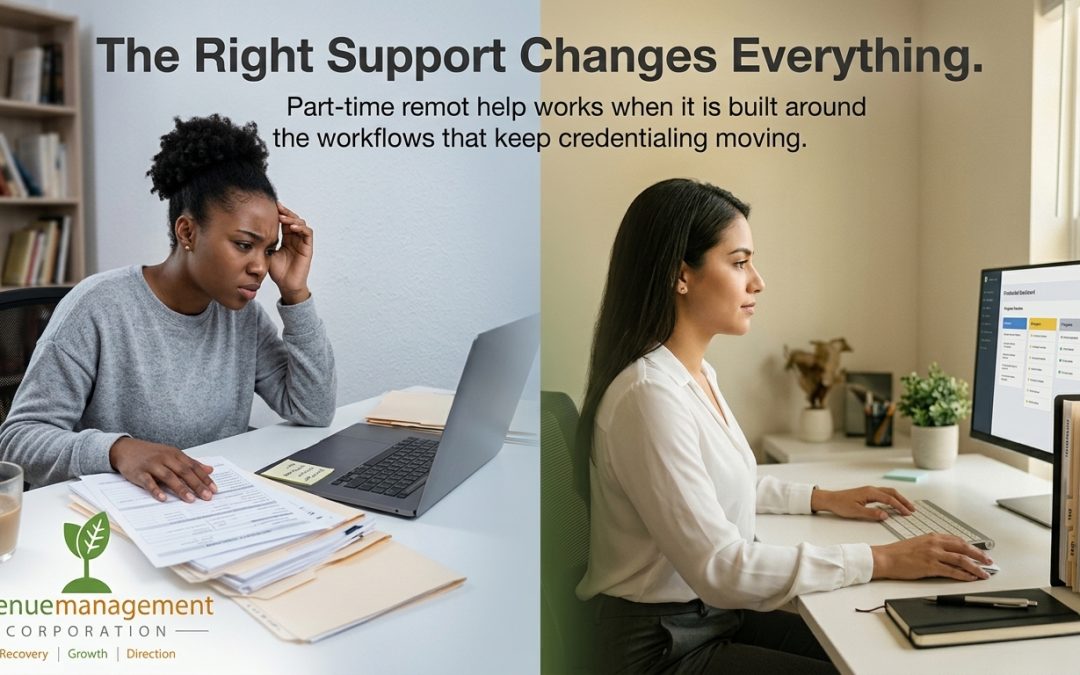
You’ve lost hours juggling credentialing paperwork, yet the backlog keeps growing. Part-time work from home jobs part time healthcare roles often get mistaken as just flexible options. The real fix lies in tying remote support directly to credentialing workflows that prevent delays and rework. Keep reading to see how structuring your healthcare administrative support this way protects operations and saves time. For more opportunities in remote healthcare administration, check out this listing.
Rethinking Part-Time Remote Roles
Beyond Flexibility in Healthcare Admin
Part-time remote roles in healthcare need more than just flexibility. They should be about ensuring continuous and accurate work. When your focus shifts from simply being flexible to maintaining consistent workflow, healthcare admin becomes manageable. Efficient workflow ensures that paperwork doesn’t pile up and processes don’t stall.
Remote healthcare admin jobs offer convenience, but they require a solid structure to make a real impact. Constant, seamless support is crucial. Consider your daily tasks: are they prone to interruptions due to flexible schedules? Aligning part-time roles with your workflow can help mitigate this. With a structured approach, you can maintain the flow of operations without sacrificing flexibility.
Continuous Workflow for Practice Success
The backbone of a successful practice is a smooth workflow. When part-time roles fit into this framework, they support uninterrupted operations. This approach prevents rework and delays. By integrating part-time roles into your workflow, you ensure tasks are completed accurately and on time.
Think about how often you’ve had to revisit tasks due to inaccuracies. These errors can be costly, both in time and resources. By focusing on role integration, you minimize these setbacks. The result is a more productive and efficient practice that keeps things moving forward.
Streamlining Credentialing Processes

Avoiding Bottlenecks and Delays
Credentialing can be a major roadblock in healthcare. When not managed properly, it leads to delays and bottlenecks. Streamlining this process is essential for maintaining practice efficiency. By focusing on a clear credentialing workflow, you can avoid these pitfalls.
How often have you faced delays due to incomplete forms or missing credentials? These are common issues, but they don’t have to be. Implementing a structured approach to credentialing minimizes errors. This not only saves time but also ensures that patient care isn’t compromised.
Importance of Accurate Credentialing Support
Accurate credentialing support is vital. It prevents delays and ensures that practitioners can focus on what they do best: patient care. With accurate credentialing, you reduce the risk of administrative errors that can hinder operations.
Imagine the relief of having a reliable system managing your credentialing process. With the right support, you can trust that your practice remains compliant and efficient. This not only protects your operations but also enhances your practice’s reputation.
Building Effective Remote Support Structures
Structuring Support Around Workflows
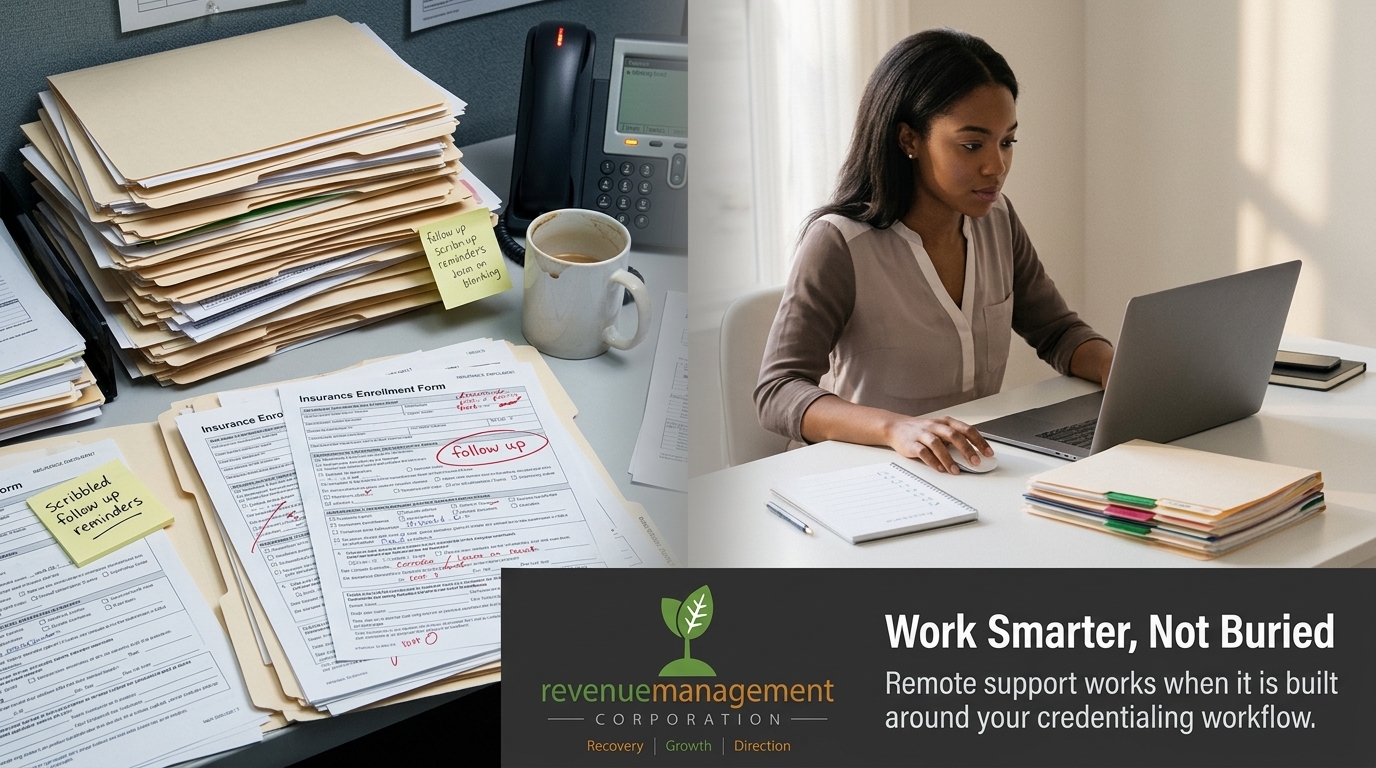
To maximize the benefits of remote support, structure it around existing workflows. This alignment ensures that support is effective and tasks are completed without disruption. When support is built into your workflow, it enhances efficiency and reduces the risk of errors.
Consider how often miscommunication or lack of coordination has led to problems in your practice. By structuring remote support around your workflow, you can avoid these issues. This ensures that your team works collaboratively and efficiently, no matter where they are.
Benefits of a Dedicated Project Manager
A dedicated project manager can transform your practice. They ensure that workflows are optimized and tasks are completed on time. With a project manager overseeing operations, your team can work more effectively and reduce administrative burdens.
Incorporating a project manager into your remote support structure offers numerous benefits. They provide oversight, coordinate tasks, and ensure that nothing falls through the cracks. This level of support is invaluable for maintaining a smooth and efficient operation.
Frequently Asked Questions
Q: What are the benefits of structuring remote roles around workflows?
A: Structuring remote roles around workflows ensures that work is completed consistently and efficiently. This approach reduces errors, prevents delays, and maintains the flow of operations.
Q: How does accurate credentialing support impact a healthcare practice?
A: Accurate credentialing support minimizes administrative errors and ensures compliance. This allows practitioners to focus on patient care and reduces the risk of operational disruptions.
Q: Why is a dedicated project manager beneficial in healthcare admin?
A: A dedicated project manager optimizes workflows and ensures tasks are completed on time. They provide oversight and coordinate efforts, leading to more efficient and effective operations.
Q: How can part-time remote roles be more than just flexible options?
A: By integrating part-time roles into existing workflows, they become more than just flexible options. This approach ensures continuous and accurate work, enhancing practice efficiency.
Q: What challenges do healthcare practices face in credentialing processes?
A: Common challenges include incomplete forms, missing credentials, and administrative errors. Streamlining the credentialing process prevents delays and ensures efficient operations.
Recent Comments