
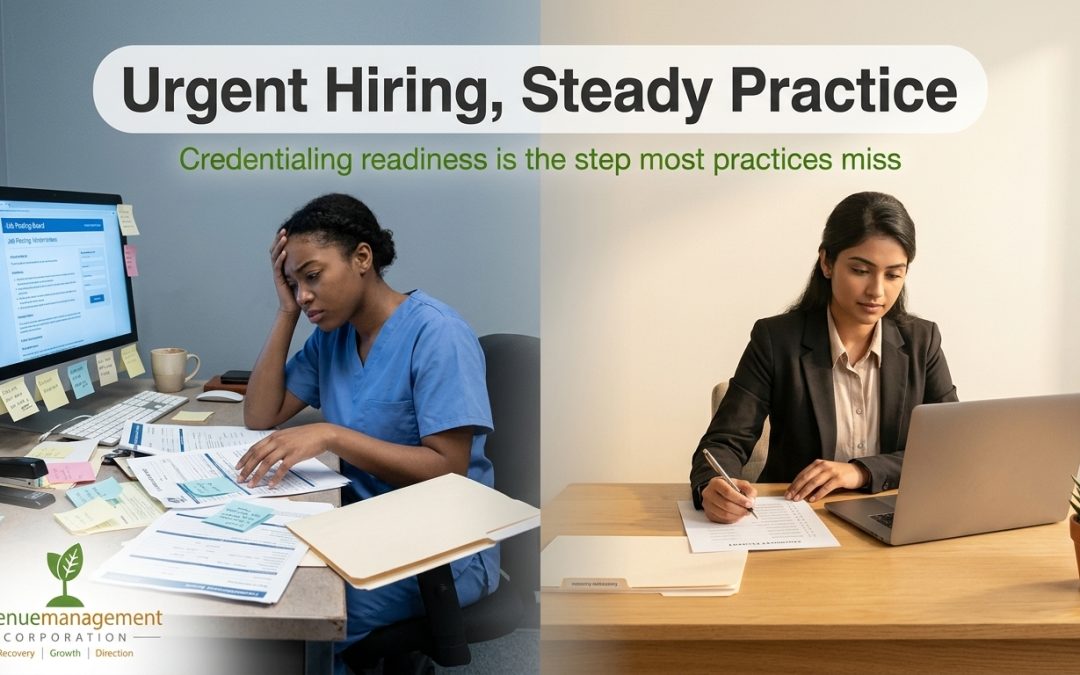
Urgent healthcare hiring doesn’t speed up by flooding job boards—it slows down when credentialing stalls. You’re under pressure to fill roles fast, but every delay in payer enrollment or provider credentialing chips away at your revenue and operations. This post breaks down how a clear, structured process keeps credentialing moving so your practice can onboard quickly without risking compliance or cash flow. For more insights, explore healthcare onboarding best practices.
The Myth of Fast Hiring
In healthcare, speed often seems synonymous with posting more jobs. Yet, credentialing is where true speed emerges. Let’s explore how to keep operations smooth.
Common Delays in Healthcare Staffing
Often, the bottleneck isn’t the lack of applicants, but the credentialing process. Credentialing delays can extend your time-to-hire by weeks. This stage, involving payer enrollment and primary source verification, is crucial. It ensures you’re bringing on qualified professionals who meet compliance standards. When credentialing slows, your entire operation can face unnecessary setbacks.
Administrative readiness plays a pivotal role in reducing these delays. Having a medical billing partner can help streamline processes. They assist with managing and submitting applications, ensuring all paperwork is accurate and complete. The less time you spend on paperwork, the faster your practice can fill critical roles.
Credentialing as the Speed Lever
Credentialing is not just a hurdle; it’s a lever for operational speed. By focusing on efficient credentialing, you can reduce onboarding times significantly. This approach requires a system that tracks each step, from document collection to verification. By maintaining a clear timeline, your practice avoids common pitfalls like incomplete documentation or missed deadlines.
A dedicated project manager can save you about 100 hours of administrative work. They handle the back-and-forth with payers and ensure every step of the credentialing process is meticulously followed. This not only accelerates hiring but also ensures compliance, protecting your revenue stream.
Streamlining Provider Credentialing

An efficient credentialing process is your key to quicker hires and better cash flow. Let’s uncover the tactics to streamline this process.
Efficient Payer Enrollment Tactics
Quick enrollment saves time and avoids revenue disruptions. Begin with a checklist of all required documents, ensuring they’re collected early. Missing papers are common delays in enrollment, so having everything ready is crucial. Utilize software solutions designed to manage credentialing documents and timelines, reducing human error and keeping every part of the process visible to your team.
Having a dedicated person or team manage enrollment tasks can cut weeks from the process. They can maintain communication with payers, following up regularly to keep things moving. This proactive approach is essential to avoid unnecessary delays that can impact your practice’s bottom line.
CAQH Optimization Secrets
The CAQH ProView is a powerful tool for credentialing efficiency. Keeping your CAQH profile updated is key to smooth operations. Regularly verify that all data in the profile is current and accurate. Many practices face delays simply because their CAQH profile lags behind their current credentials.
Streamlining this process involves setting reminders for periodic updates and verifications. Regular audits of your CAQH data can prevent common issues that delay credentialing. By staying ahead, you maintain control over your practice’s ability to bring in revenue without unnecessary hindrance.
Building a Robust Onboarding Process

A strong onboarding strategy complements efficient credentialing, creating a seamless transition for new hires.
Creating a Healthcare Onboarding Checklist
A good onboarding process ensures new hires are productive quickly. Start with a comprehensive checklist that includes all necessary orientation and training steps. This checklist should cover facility tours, EHR system introductions, and compliance training. By checking off each step, you ensure no vital information or practice protocols are missed.
Incorporate digital tools to streamline onboarding tasks. Online training modules can ensure that new staff understand your practice’s systems and procedures before they start seeing patients. This not only saves time but also prepares your staff to contribute effectively from day one.
Reducing Time to Revenue in Healthcare
Every day a position remains vacant is lost revenue for your practice. By focusing on a streamlined credentialing and onboarding process, you reduce the time it takes for new hires to contribute financially. This strategy not only speeds up the hiring process but also ensures that your practice remains compliant and ready to provide patient care.
The longer you wait to optimize these processes, the more potential revenue slips away. Embrace the systems and tools that can streamline these crucial steps, ensuring that your practice is always ready to move forward efficiently.
Frequently Asked Questions
What is credentialing in healthcare?
Credentialing is the process of verifying the qualifications and professional background of healthcare providers. It ensures that providers meet necessary standards and are authorized to provide care.
How does credentialing affect healthcare hiring?
Credentialing can delay hiring because it involves verifying credentials, which can be time-consuming. Efficient credentialing ensures new hires can start work sooner, maintaining cash flow and patient care standards.
Why is payer enrollment important in credentialing?
Payer enrollment allows healthcare providers to bill insurance companies for services. Without it, providers cannot receive reimbursement, affecting revenue and operational efficiency.
How can I speed up the credentialing process?
Use a comprehensive checklist and software solutions to manage documents and timelines. Regularly update your CAQH profile and have a dedicated team to handle communications with payers.
What role does onboarding play in reducing time to revenue?
Effective onboarding ensures that new hires are productive quickly. By having a structured process, new staff can start contributing to your practice and generating revenue sooner.
https://rmcbillingoptions.com/
Recent Comments