
Vendor marketing pitches promise smooth sailing, but your practice’s real test lies in workflow fit and revenue impact. Choosing EHR and practice management software based on glossy demos often leads to broken handoffs and denied claims that drain staff time. With 35 years in healthcare revenue cycle management, we focus on tools that match how your practice operates and protect your collections. This guide offers a clear, vendor-neutral framework to help you make a smarter, financially sound year-end decision. For more insights, check out this resource.
Vendor-Neutral EHR Selection
Choosing the right EHR is crucial. You need a system that fits your practice’s workflow and supports your revenue goals.
Evaluating Workflow Fit
The best EHR aligns seamlessly with your current processes. First, assess how a potential system integrates into your daily tasks. Does it streamline scheduling, billing, and patient communication? By evaluating these aspects, you can ensure the system supports rather than hinders your team.
Next, consider the user interface and ease of use. A complicated system can slow your staff and lead to errors. Look for intuitive designs and straightforward navigation. Talk to other practices to see what systems have worked well. Explore more about scalable EHR workflows here.
Revenue Cycle Impact Considerations
An effective EHR should improve revenue cycles. Evaluate how the system handles claims and tracks billing errors. Systems that automate denial management reduce time spent on manual follow-ups, boosting your practice’s efficiency.
Consider systems offering real-time data on collections and outstanding claims. These insights help identify bottlenecks and improve cash flow. Prioritize EHRs that support your revenue strategies and protect against claim denials. Learn more about EHR and medical billing impacts on revenue.
Practice Management Software Evaluation
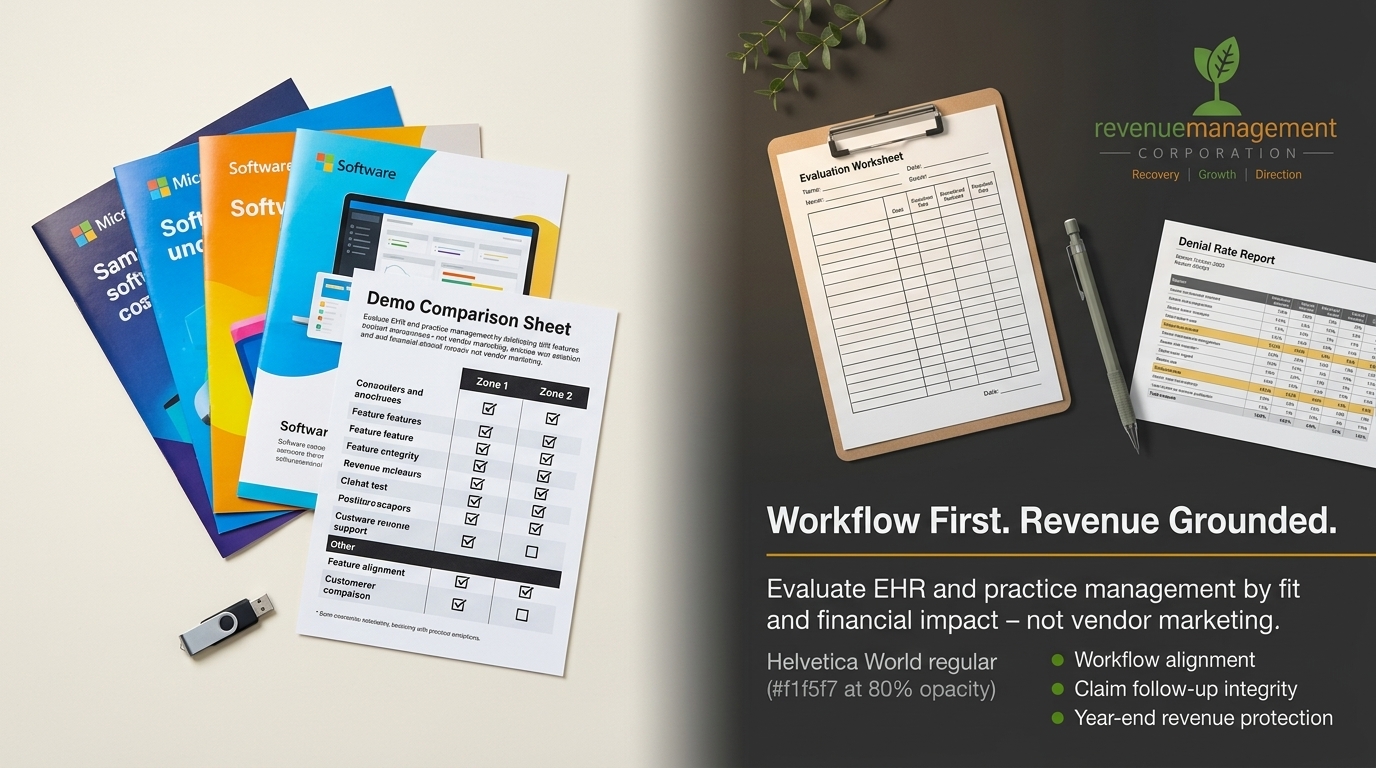
Practice management software is pivotal in enhancing daily operations. It should simplify tasks and drive financial performance.
Key Usability Factors
When selecting software, focus on usability. If the tool requires extensive training, it may not be the best choice. Simple, user-friendly interfaces lead to faster staff adoption and fewer errors. Test the software with different team members to gauge its effectiveness.
Support options are another critical aspect. Reliable customer service can help resolve issues quickly, minimizing disruptions. Look for vendors with solid reputations for support and training.
Financial Performance Metrics
Evaluate software based on its impact on your financial metrics. Does it offer tools that track key performance indicators like appointment volume and billing cycles? Systems that provide clear financial reports help you make informed decisions.
Software should also support revenue optimization by offering features like automated reminders and online payment options. These tools improve patient engagement and reduce no-shows, positively impacting your bottom line. Discover more about practice management solutions.
EHR Implementation Support
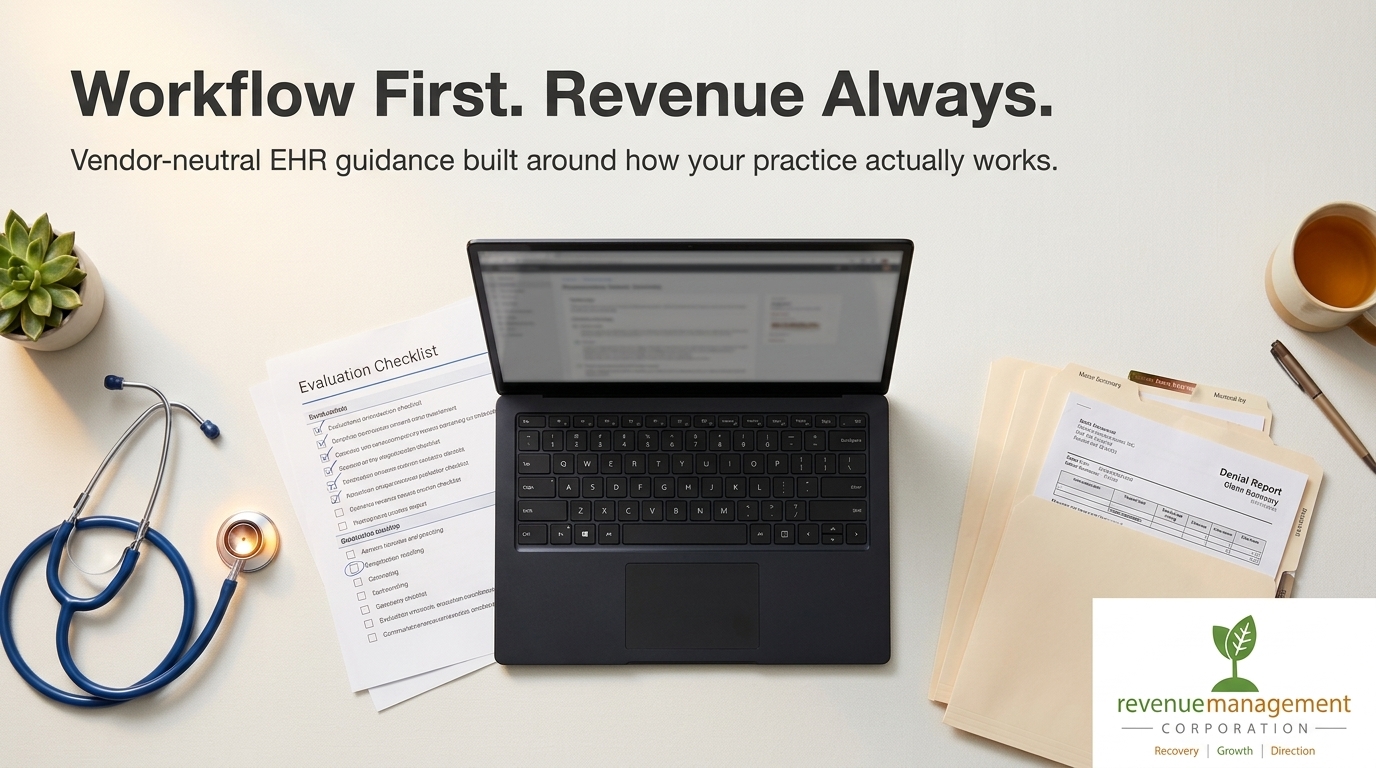
Once you’ve selected an EHR, efficient implementation is key. Proper support during this phase prevents revenue disruptions.
Common Revenue Red Flags
Watch for potential red flags that could harm revenue during implementation. Delays in claim submission, lack of staff training, and system downtime can all lead to financial losses. Address these risks by choosing vendors with a proven track record of smooth transitions.
Prepare your team for changes by offering comprehensive training sessions. This ensures everyone is comfortable using the new system, reducing the chance of errors. Evaluate the effectiveness of EHR systems further.
Effective Workflow Optimization Strategies
Optimizing workflows with your new EHR can boost efficiency. Start by mapping current processes and identifying areas for improvement. Implementing new features gradually can help your team adjust without overwhelming them.
Regularly review system performance and seek feedback from staff. This ongoing evaluation helps refine workflows and enhance user satisfaction. For additional strategies on optimizing EHR workflows, check out this guide.
Frequently Asked Questions
What is the main benefit of a vendor-neutral EHR selection?
Choosing a vendor-neutral EHR ensures you select a system that truly fits your practice’s unique needs, rather than being influenced by vendor-specific features that may not add value.
How can practice management software improve financial performance?
Effective practice management software streamlines operations, reduces errors, and offers features like automated reminders, improving cash flow and patient engagement.
Why is EHR implementation support important?
Proper support during EHR implementation prevents disruptions in revenue cycles and ensures staff are trained, reducing the risk of claim delays and errors.
Recent Comments