

Unpredictable revenue results drain your practice’s energy and profits each month. Waiting for problems to appear means you’re already losing time and margin fixing them. Revenue cycle oversight catches early signs—like denial patterns and delayed follow-up—before they become costly surprises. With steady monitoring, you can protect cash flow, reduce leakage, and make confident growth decisions that keep your practice stable through any changes. For more insights on revenue cycle management, visit this guide.
The Cost of Unpredictable Revenue
Understanding revenue inconsistencies is crucial for any healthcare practice. Without clear insights, your practice may face financial instability, affecting growth and patient care.
Recognizing Monthly Surprises
Monthly surprises can disrupt your practice’s financial health. Imagine seeing unexpected dips in revenue without a clear cause. These surprises often stem from overlooked issues in billing or claims processing.
One common cause is delayed claim submissions. When claims aren’t sent promptly, it results in unpredictable cash flow. You might also face sudden increases in claim denials. These denials occur because of errors in coding or lapses in credentialing. Both scenarios lead to revenue loss and increased administrative work.
Addressing these issues requires proactive management. By reviewing billing processes and monitoring claims, you can reduce surprises. Consider implementing regular audits to catch errors before they escalate. This approach not only stabilizes your revenue but also enhances operational efficiency.
Hidden Signs of Revenue Issues
It’s not always obvious when revenue issues arise. Hidden signs often include subtle changes in billing patterns. For instance, a steady increase in denied claims over months could indicate a systemic issue.
Another hidden sign is inconsistent patient collections. This issue may occur if there’s a lack of follow-up on outstanding balances. Such inconsistencies can significantly impact your cash flow. Additionally, changes in payer policies might affect reimbursement rates, leading to unexpected revenue drops.
To uncover these hidden signs, regular review of financial reports is essential. Keeping an eye on key performance indicators (KPIs) like days in A/R or net collection rate helps. It enables you to identify trends and address problems early. This vigilance ensures your practice remains financially healthy and prepared for any challenges.
Benefits of Consistent Oversight
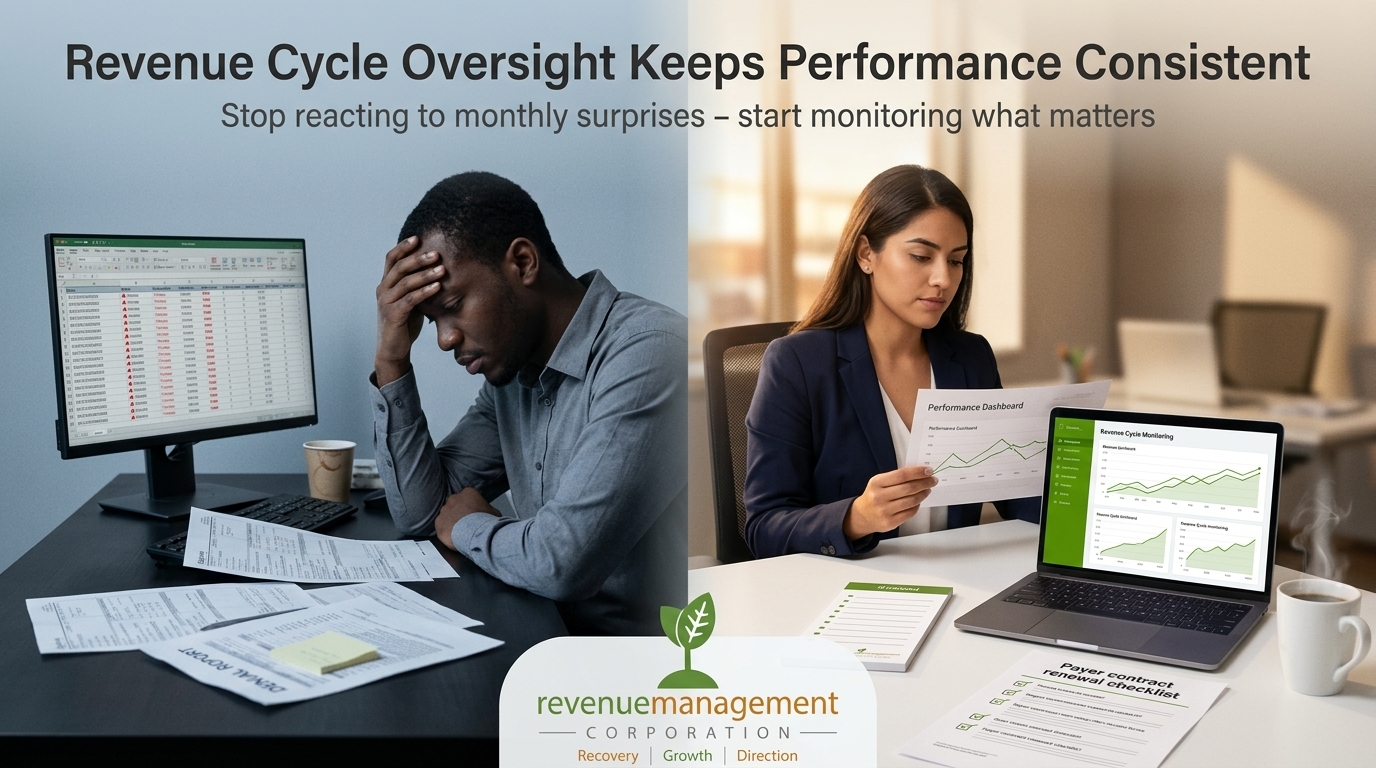
Consistent oversight brings clarity and stability to your revenue cycle. By maintaining regular monitoring, you can prevent issues from escalating and safeguard your finances.
Early Warning Indicators
Early warning indicators are your first line of defense against revenue problems. Spotting these indicators early allows for timely intervention, saving both time and resources.
Consider the practice of monitoring denial rates. A sudden spike in denials is a clear warning that something is amiss. By analyzing the reasons for denials, you can address root causes promptly. This proactive approach prevents revenue loss and improves claim acceptance rates.
Another indicator is the clean claim rate. A decrease in this rate suggests issues with claim submissions, such as incorrect coding. By tracking this KPI, you can ensure claims are processed efficiently and avoid payment delays. Implementing systems to monitor these indicators offers peace of mind and promotes financial stability.
Building a Reliable Revenue Cycle
A reliable revenue cycle is built on consistent practices and oversight. It involves more than just fixing issues—it means creating a system that supports long-term success.
Start by establishing a robust process for KPI monitoring. Regularly review metrics such as charge capture and days in A/R. These metrics provide insights into your practice’s financial health and highlight areas for improvement.
Next, ensure your team is well-trained in handling revenue cycle tasks. Investing in education reduces errors and boosts efficiency. Consider partnering with a consulting firm to streamline processes and support your team’s efforts. By building a reliable revenue cycle, your practice can focus on growth and patient care.
Steps to Achieve Reliable Performance

Achieving reliable performance requires a strategic approach. Consistent monitoring and proactive management are key to success.
Implementing KPI Monitoring
KPI monitoring is vital for understanding your practice’s financial performance. By focusing on key metrics, you can identify trends and make informed decisions.
Start by selecting the most relevant KPIs for your practice. These might include net collection rate or clean claim rate. Regularly track these metrics to spot anomalies early. Use digital tools to automate data collection and reporting, saving time and reducing errors.
Review KPI reports with your team to discuss findings and develop action plans. This collaborative approach ensures everyone is aligned and working towards the same goals. Implementing KPI monitoring not only improves financial oversight but also enhances teamwork and accountability.
Leveraging Denial Management Techniques
Denial management is crucial for maintaining a healthy cash flow. By effectively managing denials, you can recover lost revenue and improve claim acceptance rates.
Start by analyzing denial patterns to identify common issues. This analysis helps in targeting areas that need improvement. Develop a checklist to ensure claims are complete and accurate before submission. This simple step can significantly reduce denial rates.
Train your staff on best practices for resolving denials promptly. Equip them with the tools and knowledge needed to handle appeals efficiently. Consider using technology solutions to streamline the process and improve communication with payers. By leveraging denial management techniques, your practice can minimize revenue loss and enhance financial performance.
Frequently Asked Questions
What are the common causes of revenue cycle issues?
Common causes include delayed claims, increased denial rates, and inconsistent patient collections. These issues often stem from process inefficiencies or changes in payer policies.
How can I improve my practice’s revenue cycle management?
Improving revenue cycle management involves regular monitoring of KPIs, proactive denial management, and continuous staff training. Using digital tools can also streamline processes and enhance oversight.
What KPIs should I monitor for better revenue cycle performance?
Key KPIs include net collection rate, clean claim rate, and days in A/R. Monitoring these metrics provides insights into financial health and highlights areas for improvement.
Why is denial management important in revenue cycle oversight?
Denial management is crucial as it helps recover lost revenue and improves claim acceptance rates. Effective management reduces payment delays and boosts cash flow.
How do early warning indicators help in managing revenue cycles?
Early warning indicators, like increased denial rates, highlight potential issues before they escalate. By addressing these indicators promptly, practices can prevent revenue loss and maintain financial stability.
https://rmcbillingoptions.com/
Recent Comments