

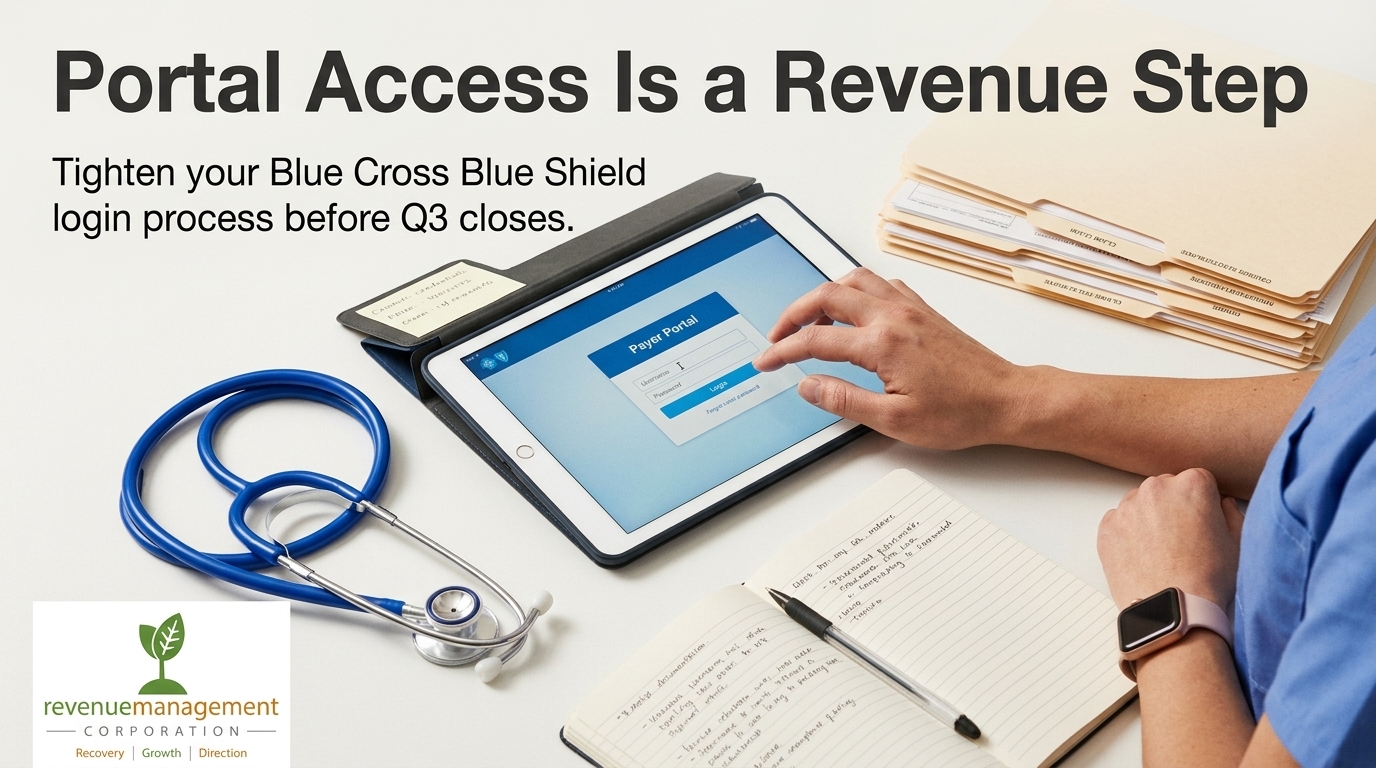
Portal access delays are quietly draining your Q3 revenue momentum. When your team struggles to log in to the Blue Cross Blue Shield login portal, every moment lost slows down eligibility verification and claim status checks. Treating this login step as a key part of your Q3 financial reset can cut preventable payer delays, speed up follow-up, and secure stronger cash flow heading into Q4. Let’s explore how tightening your BCBS provider portal access sets your practice up for success.
The Hidden Cost of Portal Access
Your practice might be losing revenue simply because of slow portal access. Let’s dive into why fixing this can change your Q3 outcomes.
Slow Access Equals Revenue Loss
Every moment spent waiting to access the Blue Cross Blue Shield login portal is a moment lost. It impacts your practice’s ability to verify eligibility and check claim statuses promptly. Imagine a team member taking extra minutes daily due to login issues. Multiply this by your number of team members, and you have hours of lost productivity. This delay cascades into slower follow-up and delayed payments, ultimately hurting your cash flow. By tightening portal access, you’re not just saving time, but actively protecting your revenue.
Credential Management for Efficiency
Managing credentials can feel like a never-ending task. But doing it right can make all the difference. When staff have easy access to the credentials they need, they spend less time searching and more time doing what matters. This involves keeping an organized system for passwords and login details. A simple spreadsheet or password manager ensures everyone has what they need when they need it. This small change can lead to big savings in time and frustration.
Streamlining Two-Factor Authentication
Two-Factor Authentication (2FA) adds a layer of security but can also be a hurdle if not managed well. Simplifying how your team handles 2FA for BCBS can make access faster and smoother. Ensure everyone understands how 2FA works and has what they need to use it effortlessly. This might mean setting clear instructions or providing tools that make the process seamless. With streamlined 2FA, your team spends less time on logistics and more on patient care.
Enhancing Portal Access for Q3 Success

Improving how your team accesses the portal can significantly impact your Q3 results. Let’s look at strategic steps that make this happen.
Importance of Role-Based Access
Not everyone needs access to every part of the portal. Role-based access can secure sensitive information while streamlining workflows. By assigning access based on job roles, you minimize the risk of errors and enhance security. This method ensures that team members only get the information they need, reducing confusion and potential mistakes. It makes your operations not only secure but also more efficient.
Crafting Effective SOPs
Standard Operating Procedures (SOPs) ensure everyone knows the best way to log in and use the portal. Drafting clear, concise SOPs can help your team navigate the BCBS portal with ease. It reduces training time and provides a reference that can prevent login issues from arising. While it takes time to set up, the long-term benefits of having a reference guide far outweigh the effort.
Credentials as Revenue Protection
Credentials are more than just access keys; they’re tools to protect your revenue. Keeping them secure yet accessible ensures your team can work without interruptions. A well-maintained system for managing these credentials protects against unauthorized access and downtime. This proactive management safeguards your revenue by minimizing disruptions.
Preparing for a Strong Q4
The steps you take today set the stage for a strong finish to the year. Here’s how to keep building on success into Q4.
Reducing Payer Delays
Quick portal access reduces the time needed to address payer issues. By streamlining how you log in and manage credentials, you cut down on delays that can slow reimbursements. This proactive approach ensures that you’re always a step ahead, keeping your revenue cycle smooth.
Accelerating Payer Follow-Up
Fast access means faster follow-up. When your team doesn’t waste time logging in, they can focus on addressing payer issues promptly. This leads to quicker resolutions, keeping your cash flow steady and reducing stress on your team. With less time spent on follow-up, your team can focus on other revenue-generating activities.
Boosting Healthcare Cash Flow
The ultimate goal is a healthy cash flow. By tightening your portal access, you set the foundation for consistent, timely payments. This isn’t just about speed; it’s about ensuring your operations run without unnecessary interruptions. A steady cash flow means your practice can invest in growth and provide better patient care.
Frequently Asked Questions
How does slow portal access affect revenue?
Slow portal access delays eligibility verification and claim status checks, leading to slower follow-up and delayed payments, ultimately impacting cash flow.
What is role-based access, and why is it important?
Role-based access means assigning portal access based on job roles. It enhances security and workflow efficiency by ensuring team members access only the information necessary for their tasks.
How can SOPs improve portal usage?
SOPs provide clear, concise procedures for logging in and using the portal, reducing training time and preventing login issues, leading to more efficient operations.
Why is credential management crucial for revenue protection?
Proper credential management ensures quick, secure access while preventing unauthorized access and minimizing downtime, protecting your practice’s revenue.
What steps can boost healthcare cash flow in Q4?
Reducing payer delays, accelerating follow-up, and ensuring quick portal access are key steps that lead to consistent cash flow, enabling better financial performance.
https://rmcbillingoptions.com/
Recent Comments