
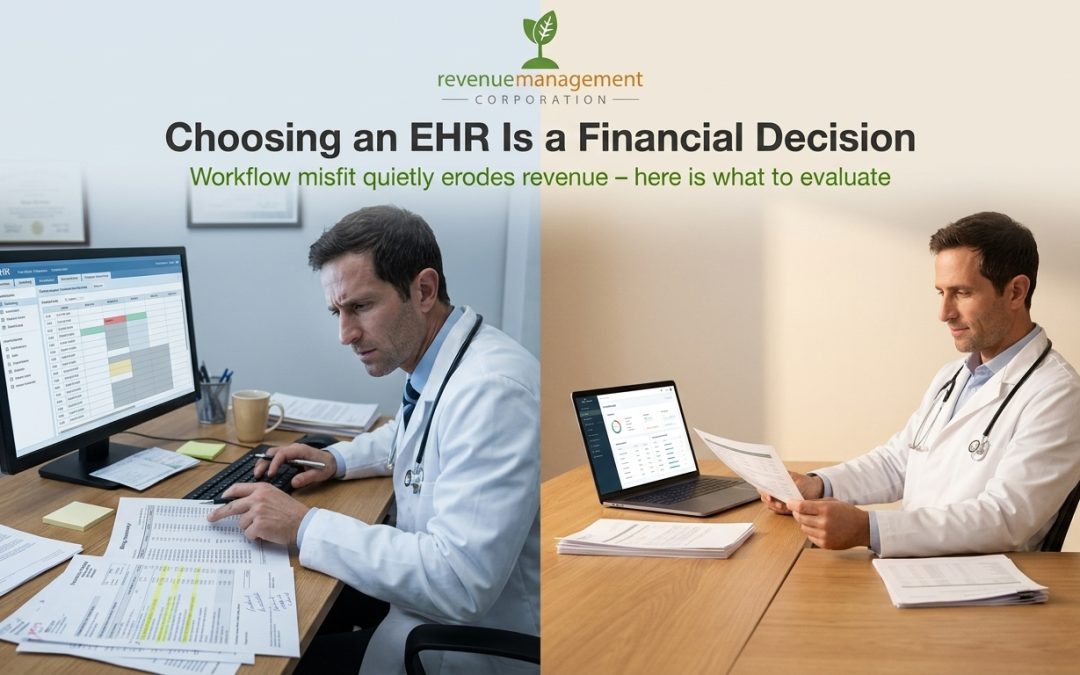
Many healthcare leaders enter budget season hoping a new EHR will simplify operations. Instead, they face hidden bottlenecks in scheduling, documentation, and billing that quietly drain revenue. Choosing an EHR is more than a tech decision—it’s a revenue cycle choice that impacts your practice’s financial health from day one. In this post, you’ll learn how workflow fit drives collections and efficiency, plus what to check before you buy. Read more about optimizing your EHR workflow.
EHR Selection as a Financial Strategy
Choosing the right EHR is not just a technical choice but a financial one. It plays a crucial role in shaping your practice’s revenue cycle and overall efficiency.
Workflow Misfit and Revenue Impact
A poorly fitting EHR can lead to hidden revenue losses. You might see small daily delays, like extra clicks or missed handoffs. These small issues snowball into larger financial problems. This is why EHR selection is a decision that directly ties into your revenue flow and efficiency.
Hidden friction in your workflow can quietly erode your practice’s performance. An EHR that doesn’t align with your needs increases the chances of errors in scheduling and documentation. This can lead to slower billing and follow-through, ultimately impacting your financial results. Ensuring a good fit means fewer disruptions and more streamlined processes.
Identifying Hidden Operational Friction
Every EHR promises to improve efficiency, but not all deliver. Operational friction is an invisible culprit. Delays in documentation and scheduling can compound over time, draining your resources. Identifying these hidden issues early helps in maintaining smooth operations and protecting revenue streams.
Evaluating EHR Workflow Alignment
Assessing EHR workflow alignment is essential for maintaining your practice’s financial health. It ensures that your system supports efficient operations and optimal revenue capture.
Practical Checklist for EHR Fit
Here’s a checklist to help you evaluate EHR fit:
-
Assess scheduling efficiency: Does the EHR simplify front-desk operations?
-
Evaluate documentation flow: How smoothly does it integrate with your clinical processes?
-
Check billing accuracy: Does it capture charges efficiently and prevent denials?
-
Review reporting capabilities: Can you easily track financial performance?
Using this checklist can prevent the common pitfalls that come with a misaligned EHR system. It ensures that every part of the revenue cycle is supported effectively, from patient intake to billing.
Key Areas: Scheduling to Billing Follow-through
From scheduling to billing, each step in your process should be seamless. An EHR that fits well will enhance patient intake automation and streamline clinical documentation. This makes the billing follow-through more reliable and efficient, reducing the chances of claim denials and boosting overall revenue.
Enhancing Practice Revenue with RMC

RMC provides solutions that help practices optimize their revenue cycle and improve financial performance.
Benefits of RCM Consulting and Credentialing
Revenue Cycle Management (RCM) consulting offers immense benefits. It helps in fine-tuning your processes, ensuring that every part of the cycle is running at peak efficiency. Credentialing is another crucial area that, when optimized, prevents delays and speeds up patient intake and reimbursement.
RMC’s consulting services provide expertise in identifying bottlenecks and offering solutions tailored to your practice’s needs. This results in smoother operations and better financial outcomes, ensuring you get the most out of your EHR investment.
Ensuring EHR ROI and Revenue Growth
Ensuring a return on your EHR investment is essential. This involves more than just selecting the right software. It’s about integrating it effectively into your practice’s operations. With RMC’s help, you can ensure your EHR is contributing to revenue growth and operational efficiency.
A well-integrated EHR should support your practice’s financial goals by reducing administrative burdens and enhancing billing accuracy. This allows you to focus more on patient care and less on paperwork.
Frequently Asked Questions
What should I look for when choosing an EHR?
When choosing an EHR, focus on workflow fit, scheduling efficiency, documentation integration, and billing accuracy. These factors directly impact your practice’s revenue and efficiency.
How can RMC consulting improve my practice’s revenue cycle?
RMC consulting identifies and resolves inefficiencies in your revenue cycle. By optimizing these processes, it enhances your practice’s financial performance and reduces administrative burdens.
Why is credentialing important for my practice?
Credentialing is vital as it ensures your practice remains in-network, allowing for faster reimbursement and maintaining patient referrals. It prevents delays in patient intake and revenue collection.
How does an EHR impact my practice’s efficiency?
An EHR impacts efficiency by streamlining scheduling, documentation, and billing processes. A well-suited EHR reduces errors and operational friction, enhancing overall practice performance.
What are the key benefits of using an efficient EHR system?
An efficient EHR system improves workflow, enhances billing accuracy, supports revenue growth, and reduces administrative work, allowing you to focus on patient care.
https://rmcbillingoptions.com/
Recent Comments