

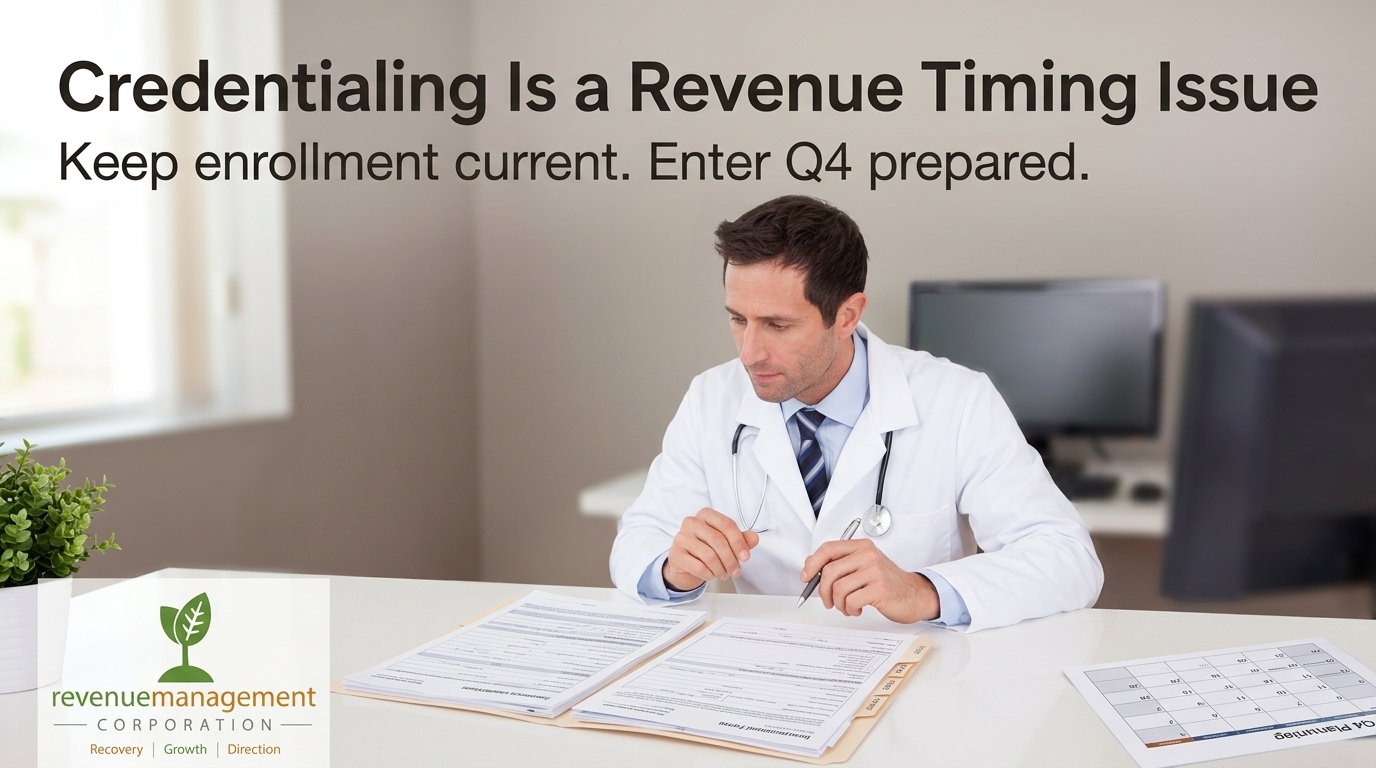
Credentialing often gets pushed to the last minute, turning a routine task into a cash flow roadblock just when your practice can least afford it. Waiting until budget season to handle provider enrollment and recredentialing creates hidden delays that disrupt payer readiness and revenue timing. Staying current with medical credentialing lets you enter Q4 with fewer surprises, faster onboarding, and a clear path to protected revenue—giving you control when it matters most. For more on recommended practices, check this resource.
Credentialing as Revenue Timing
Understanding credentialing as a revenue issue can transform how you approach practice management. When credentialing is delayed, it impacts cash flow, leading to unexpected revenue gaps. Let’s explore how early action can prevent these disruptions.
Credentialing Delays and Cash Flow
Credentialing delays can cause significant cash flow problems. Consider a scenario where a new provider is ready to see patients, but credentialing isn’t complete. The result: missed billing opportunities and delayed revenue. This affects not only immediate cash flow but also long-term financial planning.
To avoid these pitfalls, prioritize credentialing as part of your practice’s revenue strategy. Keeping credentialing current ensures that your billing processes align with provider readiness, minimizing disruptions. Moreover, when credentialing is delayed, it often coincides with other year-end fiscal responsibilities, compounding stress and financial strain.
Avoiding Year-End Credentialing Surprises
Procrastination in credentialing leads to unpleasant surprises at the end of the year. By then, budget constraints and administrative bottlenecks peak, making it even harder to catch up. These surprises can be avoided with proactive management.
A disciplined credentialing process eliminates these last-minute rushes. Start by reviewing your roster and identifying any upcoming expirations well in advance. This foresight allows you to address issues before they become urgent, ensuring smooth operations even during the busiest times.
Steps to Credentialing Readiness

Preparing for credentialing readiness is key to maintaining steady cash flow. By following certain steps, you can ensure your practice remains financially healthy.
Conduct a Roster and Payer Gap Audit
Begin with a thorough audit of your current payer contracts and provider roster. A gap audit identifies where your team stands with each payer, revealing coverage gaps that may delay revenue.
This audit also highlights any discrepancies in provider information. Correcting these ensures that all providers are properly enrolled with relevant payers. This step is crucial for maintaining uninterrupted insurance payments and avoiding denials. Regular audits keep your practice aligned with payer requirements and reduce potential revenue losses.
Standardize Data: Cleanup Essentials
Data standardization plays a crucial role in credentialing. Inconsistent data leads to processing errors and delays. By standardizing provider information, your practice minimizes these risks.
Start by organizing provider data—such as CAQH profiles—ensuring accuracy and completeness. Consistent data allows for smoother processing and faster credentialing. This proactive approach not only prevents delays but also enhances your practice’s overall efficiency.
Create an Expirables Calendar
An expirables calendar is an essential tool in proactive credentialing. It tracks certification and license expiration dates, ensuring timely renewals.
By maintaining this calendar, your practice can prevent lapses in credentialing that disrupt operations. Regular updates and reminders help avoid any surprises, keeping your team prepared and your revenue protected. This calendar becomes a crucial part of your financial planning, aligning credentialing processes with fiscal goals.
Protecting Revenue Through Proactive Credentialing
Proactive credentialing is a powerful strategy for protecting your practice’s revenue stream. It ensures that your financial operations run smoothly and efficiently.
Align Provider Onboarding with Billing Activation
Aligning provider onboarding with billing activation is essential for seamless operations. This alignment ensures new providers can start billing immediately, maximizing revenue from the start.
This process involves coordinating credentialing timelines with onboarding schedules. When done correctly, providers are ready to bill as soon as they begin seeing patients. This alignment reduces revenue lag and sets your practice up for financial success from day one.
Prevent Denials with Strategic Credentialing
Strategic credentialing is key to preventing claim denials. By anticipating payer requirements and aligning credentialing processes accordingly, you can reduce denial rates significantly.
Understanding common denial reasons and addressing them proactively minimizes disruptions. This strategy not only protects your current cash flow but also enhances your practice’s reputation with payers. In turn, this can lead to better contract terms and improved financial outcomes.
Monitor for Early Denials Post-Go-Live
Monitoring for early denials post-go-live is crucial for maintaining cash flow. These initial denials provide valuable insights into credentialing effectiveness.
By promptly addressing any issues that arise, your practice can quickly adjust processes and prevent future denials. This vigilance ensures that your revenue stream remains robust and uninterrupted. Regular monitoring and quick response are integral parts of a successful credentialing strategy.
Frequently Asked Questions
What is medical credentialing?
Medical credentialing is the process of verifying healthcare providers’ qualifications and granting them the authority to practice in their field. It ensures that they meet the necessary standards and can bill insurance companies for services rendered.
Why is credentialing important for cash flow?
Credentialing is crucial for cash flow because it allows providers to bill insurance companies for their services. Without proper credentialing, claims may be denied, leading to delayed or lost revenue.
How often should credentialing audits be conducted?
Credentialing audits should be conducted regularly, at least once a year, to ensure all provider information is up-to-date and aligned with payer requirements. Frequent audits help prevent revenue disruptions and maintain smooth operations.
https://rmcbillingoptions.com/
Recent Comments